
FDM and DLP 3D Printing: When to Choose Which Method?
This article was translated automatically from Turkish by AI; in case of doubt, the Turkish original prevails. Read the Turkish original
Creality’s guide from 11.17.2026 explains that FDM uses melted thermoplastic filament, while DLP cures liquid resin layer by layer with projection. The article turns differences in detail, material, surface, workflow, and safety into a decision checklist. It contains no product or price recommendations; resin is handled only with gloves and ventilation.
How do the two methods work?
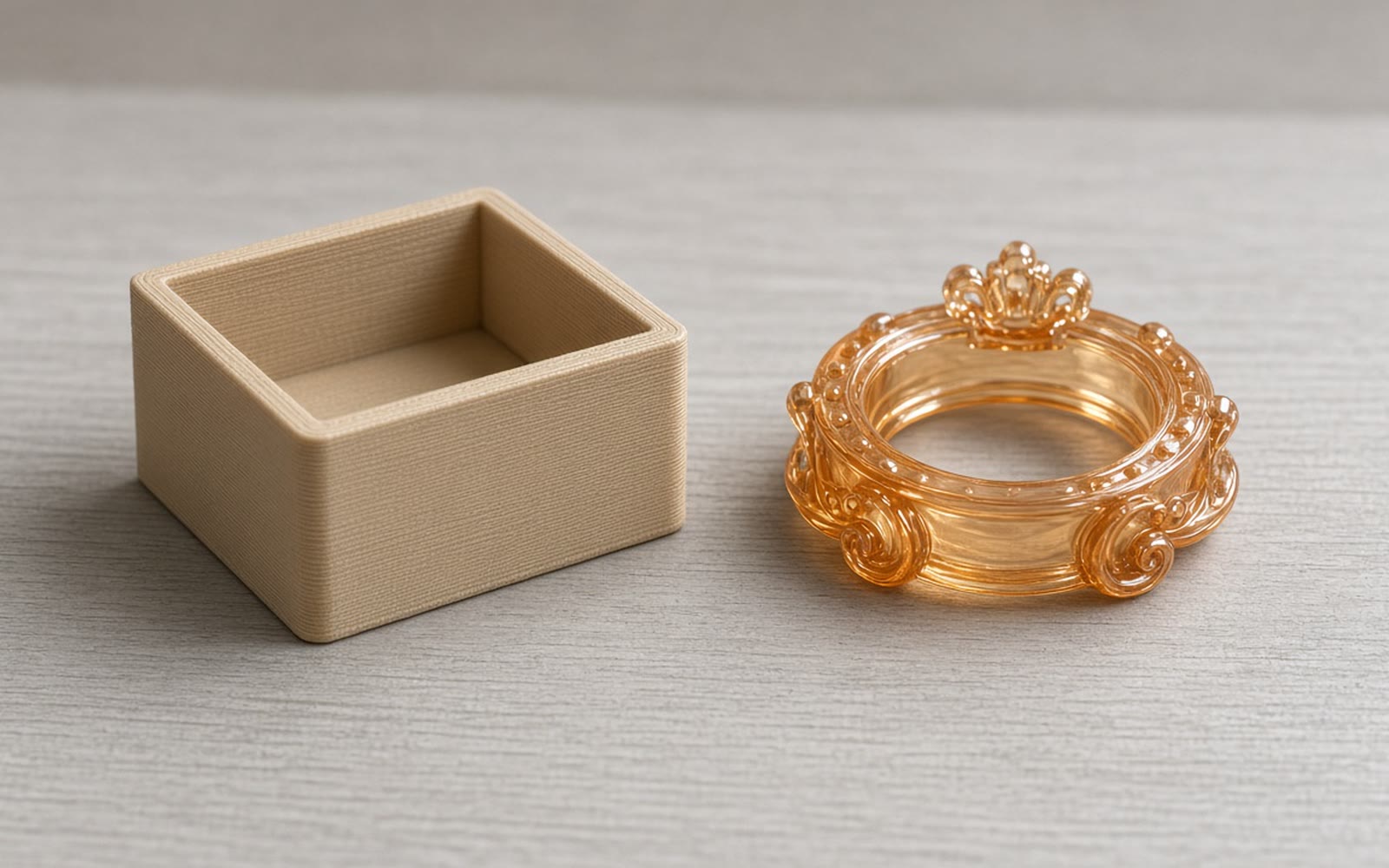
Creality’s article, “FDM vs DLP 3D Printing: Which Technology Is Right for You?” dated November 17, 2026, ties the choice to the intended use of the finished part. Both methods build objects layer by layer, but the materials and equipment differ. FDM extrudes melted thermoplastic along a toolpath by passing solid filament through a heated nozzle. DLP works by projecting an entire layer image onto a tank of photopolymer resin, curing it with light all at once.
According to the guide, DLP differs from SLA, which uses a laser to scan points, and LCD/MSLA, which uses an LCD panel as a mask: in DLP, the layer is carried by a micro-mirror device. This means that in DLP, duration depends more on the number of layers than the number of parts on the plate; therefore, bulk printing of small parts can be practical. In FDM, duration depends on path length and volume. Supports are usually needed only for prominent overhangs in FDM; however, in DLP resin parts, supports and post-curing are almost always required.
Detail, material, and surface
Creality initially states that the actual outcome depends on the machine, material, geometry, and settings. FDM materials include thermoplastics like PLA, PETG, ABS, ASA, and TPU; engineering filaments and carbon fiber composites are also mentioned in this range. Detail is limited by nozzle diameter and layer height. The number of walls, infill, printing orientation, and layer adhesion are variables set by the operator; layer adhesion also depends on temperature, cooling, and material. On the surface, layer lines are visible unless post-processed. Build volume is generally more practical compared to typical DLP machines, which are limited by the projector’s image area.
In DLP, materials are photopolymer resins formulated for detail, toughness, or casting models. XY resolution depends on the projector pixel size and lens, and layer height depends on the Z-step; very fine features can be achieved on small parts. Curved surfaces often appear smoother post-printing. Conversely, many engineering resins can be more brittle than common FDM thermoplastics, and strength depends on formulation, orientation, and support placement.
Workflow, safety, and when to choose either
A single small DLP part can complete quickly since it cures an entire layer at once; however, the workflow doesn’t end with the printer. Parts require washing in isopropyl alcohol or a similar solvent, removal of supports, and final curing with UV. Gloves, eye protection, and ventilation are essential for handling liquid and uncured resin; resin, washing liquid, and used tank films must be disposed of following manufacturer instructions and local regulations. Ventilation is useful for FDM when working with ABS and ASA; hot nozzle and bed also demand caution. In FDM, finishing is often limited to bed separation, support trimming, and light sanding if needed.
According to Creality, FDM is a suitable start for functional prototypes, fixtures, larger models, and iterative design; it leans toward this side if simple shop clean-up is essential. DLP stands out for small, detailed parts like miniatures, jewelry models, dental or medical models, and smooth casting molds; it can also be advantageous to compactly place many small parts on the same plate. This article does not recommend specific printers or prices. Resin must be used only with gloves, eye protection, and ventilation, following the manufacturer’s disposal guidance.
Sources
- Creality: FDM vs DLP 3D Printing: Which Technology Is Right for You?Source date: 17 November 2026
Rate this article
Your rating is stored in your account; everyone else sees only the average and the number of ratings. Details on the Privacy page.