Difference Between Laser Etching and Engraving: Surface Change vs. Material Removal
This article was translated automatically from Turkish by AI; in case of doubt, the Turkish original prevails. Read the Turkish original
A xTool academy post from November 25, 2026, differentiates laser etching and engraving as two methods within the same marking family. Etching alters the surface in a thin layer for a shallow mark, while engraving removes material for a groove often felt by touch. Depth, speed, energy, and wear resistance depend on this distinction. The explanations below are based on the manufacturer's guide.
How are the two methods distinguished?
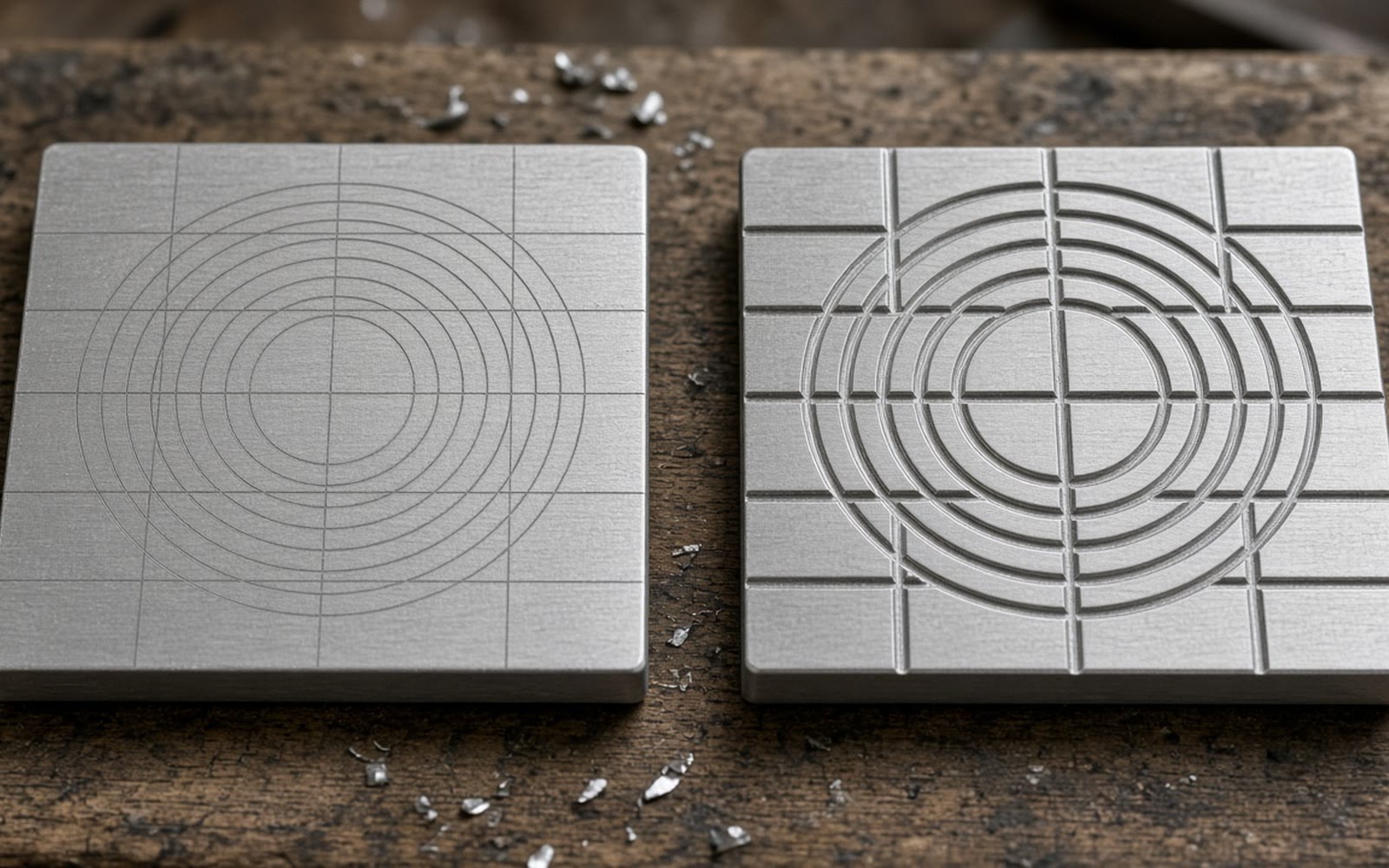
xTool’s academy post titled “Laser Etching vs Laser Engraving: What's the Difference?” dated November 25, 2026, states that laser etching and engraving are often used interchangeably, with the real difference lying in how the beam interacts with the material. According to the manufacturer, etching changes the surface to leave a shallow mark, while engraving removes material to create a deeper groove that is often felt by touch. Both processes fall under laser marking. The descriptions in this post are from the manufacturer's own explanations; they are not based on independent measurements.
How does etching work?
In metal etching, a focused beam heats the surface enough to melt a thin layer. The melted layer slightly rises, then solidifies with a rougher texture than the untouched surrounding metal. This rough area scatters light differently; thus, the mark becomes visible and may appear light or dark depending on the metal and settings. According to the source, this mark on metal might sit slightly above the original surface because the melted material has expanded, and it doesn’t significantly alter dimensions. In glass, the process is different: a CO₂ laser creates microscopic cracks on the surface, giving the pattern a frosted appearance.
How does engraving work?
In engraving, the laser removes material along its path; xTool calls this laser ablation. There might be vaporization in metal and thermal degradation in wood. The mark can be shallow or deep; if a single pass is not enough, the same area is rescanned. Since material is removed, the engraved mark sits below the original surface. The manufacturer notes that the method is applied not only to metals but also to non-metal materials like wood and acrylic.
Depth, speed, energy, and wear
The comparison suggests that etching is generally faster and requires less energy because it only alters a thin layer; deeper engraving on the same metal requires more energy and often several passes. Both marks are considered permanent; however, etching, being closer to the surface, may fade quicker under intense friction. In engraving, even if part of the surface wears away, the underlying mark remains. Hence, the source sees engraving as more wear-resistant for frequently handled industrial tools and machine parts.
Material and laser type
The type of laser determines what material can be processed. According to xTool, CO₂ lasers work with wood and acrylic but have limited engraving capabilities on bare metal; fiber lasers are primarily designed for metal processing. The guide mentions diode lasers for wood, leather, and opaque acrylic; low-power infrared lasers for compatible metals and plastics; MOPA fiber lasers for colored marking and relief on metals and selected plastics; and UV lasers for fine marking on glass, crystal, ceramics, and compatible plastics. For UV, the source lists a typical wavelength of 355 nm and claims it provides fine marking with less heat damage on compatible materials. In wood or leather, the process referred to as “etching” may not involve melting as in metal; the mark may also come from a color change or slight material removal.
With a compatible laser source, both results can be achieved on the same machine by adjusting power, speed, number of passes, focus, and pulse settings in pulsed systems. The source specifically notes that increasing the power of a diode laser will not equip it with the deep metal engraving capability of a fiber laser, and settings should be tested on a spare piece first.
Where to use which, and points to consider
Etching is often used for logos, serial numbers, barcodes, and QR codes on metal parts, as well as for decoration on jewelry and personal drink containers where a deep groove is not desired; projects on glass that want a frosted look also fall in this category. Engraving comes to the forefront in cases of deep writing, industrial parts, personal gifts, brass plates, and wooden signs. Etching is suitable for a metal logo where a relatively flat surface is desired; engraving is deemed appropriate for a wooden sign where depth is part of the aesthetic. A shallow mark might be more suitable on thin or delicate metal parts.
Both processes require safety precautions: an enclosed workspace, the manufacturer's eye protection guidance, and ventilation or fume extraction. The generally lower energy use of etching does not inherently make it safer; both processes can produce fumes and airborne particles. This post does not suggest any devices or purchases. Comparisons rely on the manufacturer’s guide descriptions; actual results may vary based on material, machine, and settings.
Sources
- xTool: Laser Etching vs Laser Engraving: What's the Difference?Source date: 25 November 2026
Rate this article
Your rating is stored in your account; everyone else sees only the average and the number of ratings. Details on the Privacy page.