A Guide to Working with MDF in Laser Cutting: Prototyping, Painting, and Safe Ventilation
This article was translated automatically from Turkish by AI; in case of doubt, the Turkish original prevails. Read the Turkish original
MDF is a cost-effective and paintable engineered wood useful for laser prototyping, stencils, and test cuts. This practical guide covers test grids, painting steps, sublimation boards, outdoor ventilation, and more frequent machine cleaning.
What is MDF and why choose it?
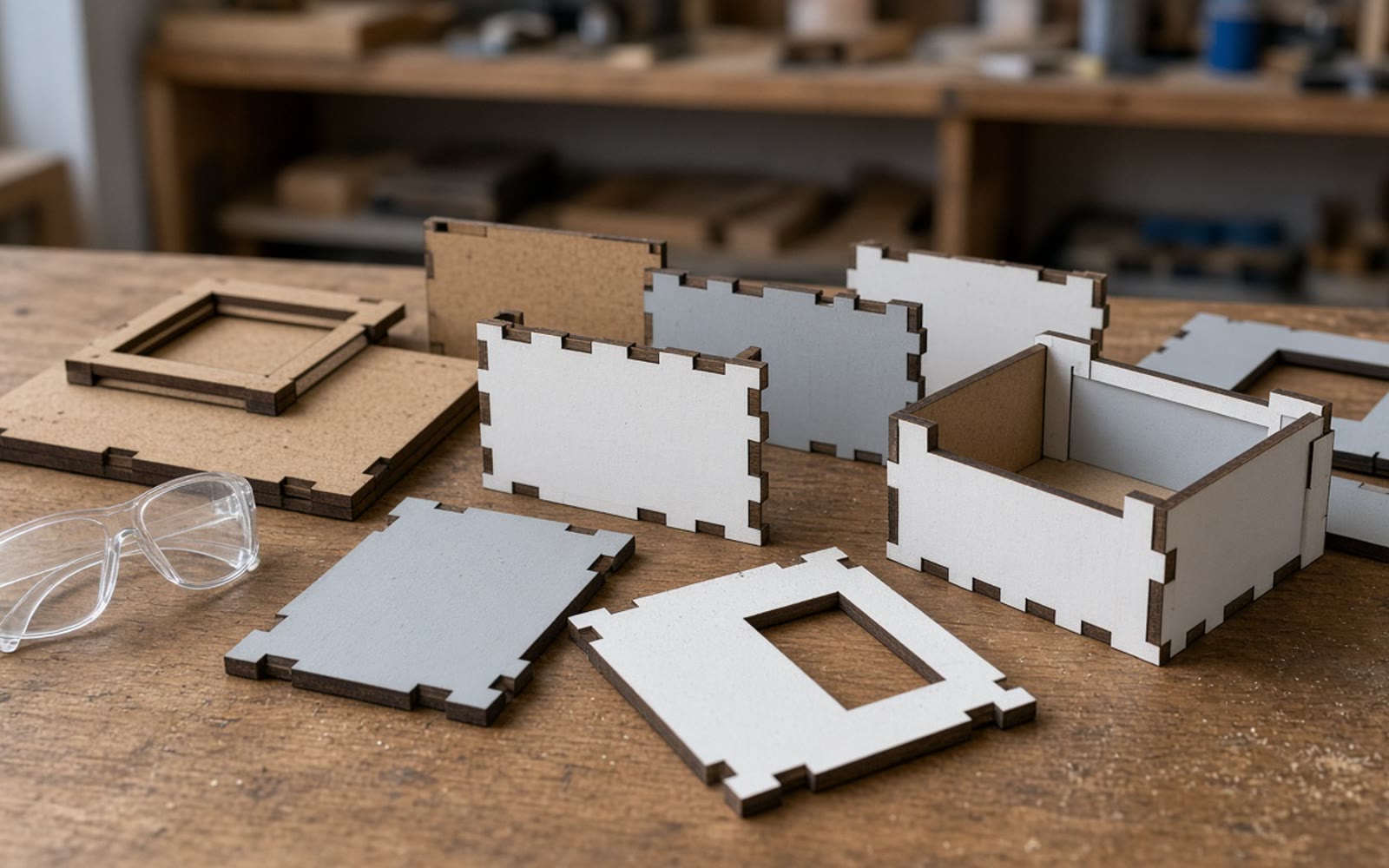
MDF (medium-density fiberboard) is an engineered wood produced by pressing wood fibers with a binder. Glowforge's material guide dated January 21, 2025, describes MDF as both affordable and paintable. Therefore, it is a good option for testing designs before moving on to expensive materials, producing templates and prototypes, practicing new techniques, and learning how settings affect the outcome of cuts and engravings.
What projects is it suitable for?
Ideas listed in the source include painted signs with textured backgrounds, prototypes for client approval, painted game pieces, layered decorative items, and templates and jigs for workshops. In layered designs, a depth effect can be achieved by gluing several thin MDF pieces on top of each other.
Settings: Test on a scrap piece first
The source does not provide specific power or speed values; the correct setting depends on the machine, lens, material thickness, and manufacturer. Therefore, before starting the main work, cut a small test grid in the corner of the same board: try different combinations of power and speed side by side, noting whether the cut was complete and any edge scorching. If your machine manufacturer provides a starting setting for MDF in the material list, use that as a base.
Painting steps
The sequence recommended by the source is as follows: first, apply two coats of automotive filler primer, followed by two or three coats of spray paint, and finish with a protective topcoat. For a more interesting surface, you can engrave shallow patterns on MDF before painting; applying the same painting steps results in a textured appearance. Wait for each coat to dry and use spray paint in a well-ventilated area.
Sublimation board
A sublimation board is a type of MDF with a specially coated surface. The design is first printed on paper with a sublimation printer and then transferred onto laser-cut pieces using a heat press. This combines full-color printing and precise cutting in the same piece. Check your machine manufacturer's material recommendations before processing coated surfaces in the laser.
Safety: Ventilation and cleaning
As MDF is an engineered wood, fine particles are produced during cutting, necessitating good ventilation. The source strongly recommends venting smoke outside instead of relying solely on an air filter. Never disable the machine’s lid, sensors, or safety switches, and never leave the machine unattended during cutting.
Since particles can accumulate inside the machine, you need to clean the lens, mirrors, and interior cavity more frequently when working with MDF. The source does not recommend using MDF with some manufacturers' models; therefore, check the material and maintenance recommendations from your own machine's manufacturer before starting with MDF.
Sources
- Glowforge – Material Deep Dive: MDFSource date: 21 January 2025
Rate this article
Your rating is stored in your account; everyone else sees only the average and the number of ratings. Details on the Privacy page.