Guide to Laser Cutting and Engraving Acrylic: Cast Sheet, Edges, and Key Points
This article was translated automatically from Turkish by AI; in case of doubt, the Turkish original prevails. Read the Turkish original
Acrylic (PMMA) is a popular material for laser cutting with clean edges and colorful engraving. This guide summarizes the difference between cast and extruded, the white/clear limitation in diode lasers, two-tone and painted clear techniques, as well as the PVC caution from the manufacturer's in-depth article.
Why Acrylic?
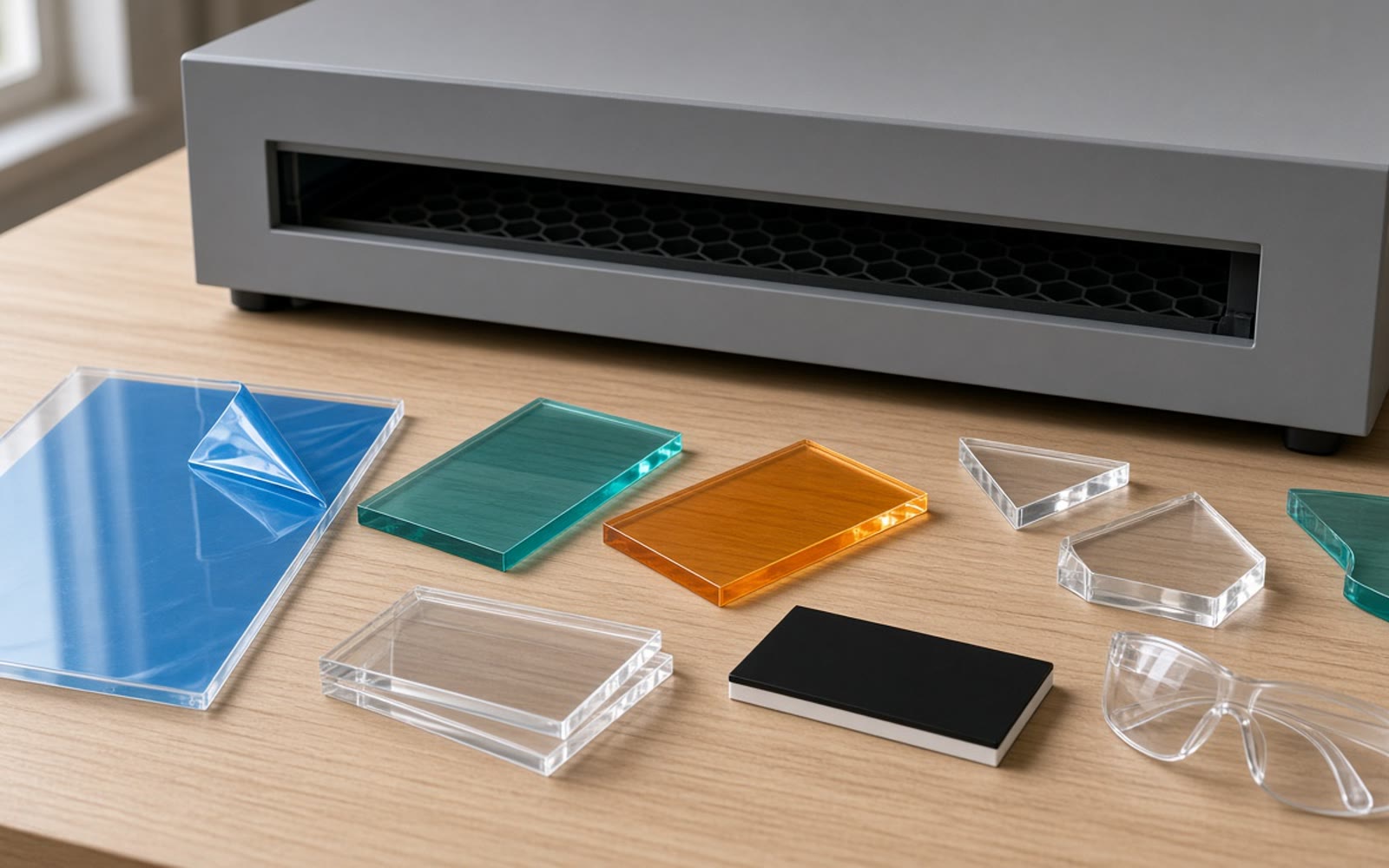
Acrylic (PMMA) is seen in laser workshops as a durable alternative to glass, offering water resistance and a wide range of colors. When laser cutting, characteristic 'flame-polished' edges can be produced; this effect is sought after in many signs and decorative pieces.
Typical craft thicknesses mentioned in the source include approximately 3 mm (1/8") and 6 mm (1/4") sheets with protective paper masking. These are only example thicknesses; you should rely on your own sheet's actual measurements and your machine manufacturer's material guide. A power and speed chart is not provided in the source; testing with scrap pieces is essential.
Cast or Extruded?
The source recommends cast acrylic for laser compatibility and smoother, polished results. Checking for the term 'cast' when purchasing is a practical first step.
Special types include two-tone (reveals a contrasting bottom color when the top color is engraved), holographic, mirrored, and speckled/fluorescent colors. Two-tone sheets are particularly used for nameplates and signs: the laser engraves the top layer to reveal the bottom color.
Laser Type and Color Selection
The source mentions that high-power CO₂ class lasers can cut and engrave most acrylic colors, whereas white and clear acrylic are not compatible with diode/craft class lasers—you must stick to colors suitable for the diode wavelength. Your machine's material list is binding; assuming 'any color is compatible with any laser' is incorrect.
For photo/contrast engraving on clear acrylic, the source describes: apply black spray paint to the clear sheet, and the laser engraves the paint to reveal the image. By layering, multiple acrylic pieces can be glued on top of each other to achieve shadow box-like depth; a suitable adhesive for acrylic should be used.
Safety: Acrylic Is Not PVC
Acrylic (PMMA) should not be confused with PVC/vinyl, which releases toxic fumes containing chloride and can damage the machine when lasered; PVC/vinyl should not be laser cut. Verify the sheet's material label and component information before cutting.
Closed setup, fume extraction, and the manufacturer's material presets are generally good practices. No claims of food contact safety or 'non-toxic' are made here. Example applications mentioned in the source include water-resistant organizers, jewelry shapes, business cards, mirrored decorative pieces, and layered panels; no specific brand model or automatic QR setting is required—your own machine's presets and scrap testing are sufficient.
Sources
- Glowforge Blog – Material Deep Dive: AcrylicSource date: 21 January 2025
Rate this article
Your rating is stored in your account; everyone else sees only the average and the number of ratings. Details on the Privacy page.