
Foam Cutting with Laser: EVA, PE, PU and Safety Tips
This article was translated automatically from Turkish by AI; in case of doubt, the Turkish original prevails. Read the Turkish original
Laser cutting foam yields precise edges and repeatable parts with proper material and ventilation. This guide summarizes common foams like EVA, polyethylene, and polyurethane, the difference between CO₂ and diode lasers, and PVC and HCN warnings as originally stated.
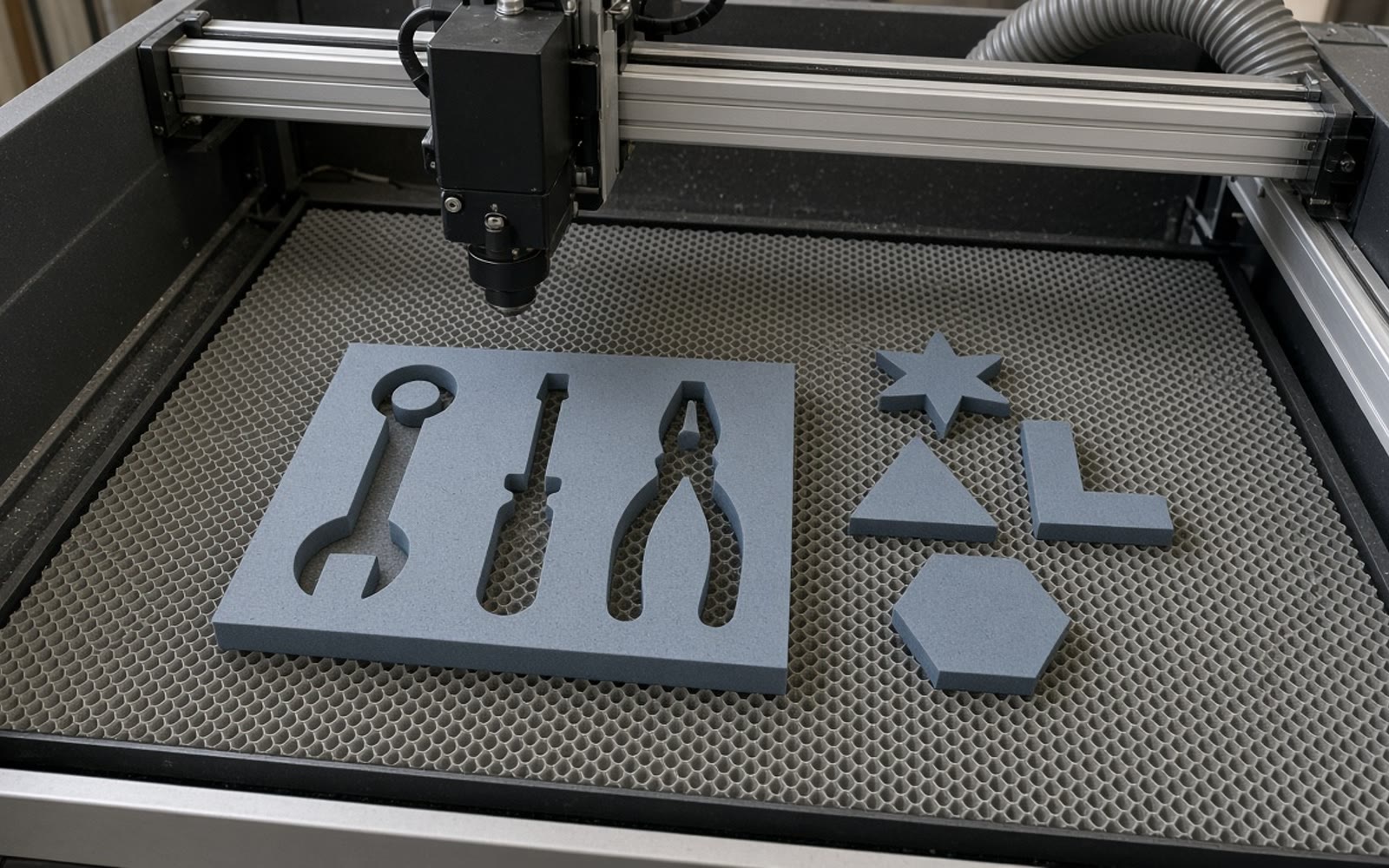
How Does the Process Work?
In laser foam cutting, a vector or laser file is first prepared; power and speed are adjusted according to foam thickness and density. The sheet is securely placed on the bed, focus is set, and the laser vaporizes the foam along the design paths to cut. Two techniques are described: vector cutting (contour) and raster engraving (line-by-line scanning for patterns).
Advantages over mechanical cutting include intricate shapes with a thin kerf, edges needing little cleanup, speed, repeatability, and no adhesives or chemicals used during cutting. The source does not provide power and speed values; it is necessary to test with a sample piece according to the manufacturer’s guide for each machine and foam.
What Types of Foam Are We Talking About?
The source lists common types that can be cut with lasers: EVA (ethylene-vinyl acetate), polyethylene, polyurethane, styrofoam, and polystyrene foam. EVA is known for its density and flexibility, used in interior and insulation applications; polyethylene is more commonly chosen for sealing and packaging. Polystyrene (styrofoam) and polypropylene are laser-cuttable but pose risks of melting or igniting, so air-assist and careful operation are recommended.
Application examples include packaging inserts, interior panels, prototypes, architectural models, gaskets and gasket-like parts, acoustic foam, and shoe cushions. These are general usage areas, not industrial sales promises.
PVC Ban and Polyurethane Warning
The source clearly advises against laser cutting PVC foam. PVC contains chlorine, which releases toxic fumes when heated, potentially damaging to health and the laser machine. Thus, keep foam containing PVC or vinyl away from the laser; verify the actual component list of the sheet before cutting.
For polyurethane foam, the source notes that it may release Hydrogen Cyanide (HCN) gas when heated. Thus, polyurethane cutting should be done in an enclosed setup with fume extraction. General rule: always test a small sample with any new foam, and adhere to the machine manufacturer’s material guide and exhaust setup.
Diode or CO₂?
The source indicates that CO₂ lasers are the best option for foam, particularly for thick tasks and professional use. According to the source, diode lasers are more affordable and lower powered; they are a suitable option for DIY projects; both diode and CO₂ are possible for EVA. High power does not make an unsuitable foam safe. Base your decision on your machine’s material list and exhaust capacity.
Sources
- xTool Academy – Laser Cut Foam: The Ultimate GuideSource date: 4 November 2026
Rate this article
Your rating is stored in your account; everyone else sees only the average and the number of ratings. Details on the Privacy page.