CO₂, diode, fiber, MOPA, UV: Which laser processes which material? A practical guide by wavelength
This article was translated automatically from Turkish by AI; in case of doubt, the Turkish original prevails. Read the Turkish original
A laser's capability to process a material is determined more by its wavelength and whether the material absorbs this light than by its wattage. This article matches five types of lasers to workshop materials based on wavelength and material information from xTool's guide, summarizing common mistakes and the PVC/vinyl warning.
The determining factor: wavelength
A laser beam only works when absorbed by the material. If the light reflects off the surface or passes through the material, increasing power won't change the result. Therefore, the first question in the workshop should be, “Does this material absorb this wavelength?” not “How many watts?”
According to xTool's guide, the wavelengths of the five laser types in the desktop and small business market are as follows: UV 355 nm, blue diode approximately 450 nm, fiber and MOPA 1064 nm, and CO₂ 10,600 nm (10.6 µm).
Wood, acrylic, leather, and paper: CO₂ and diode
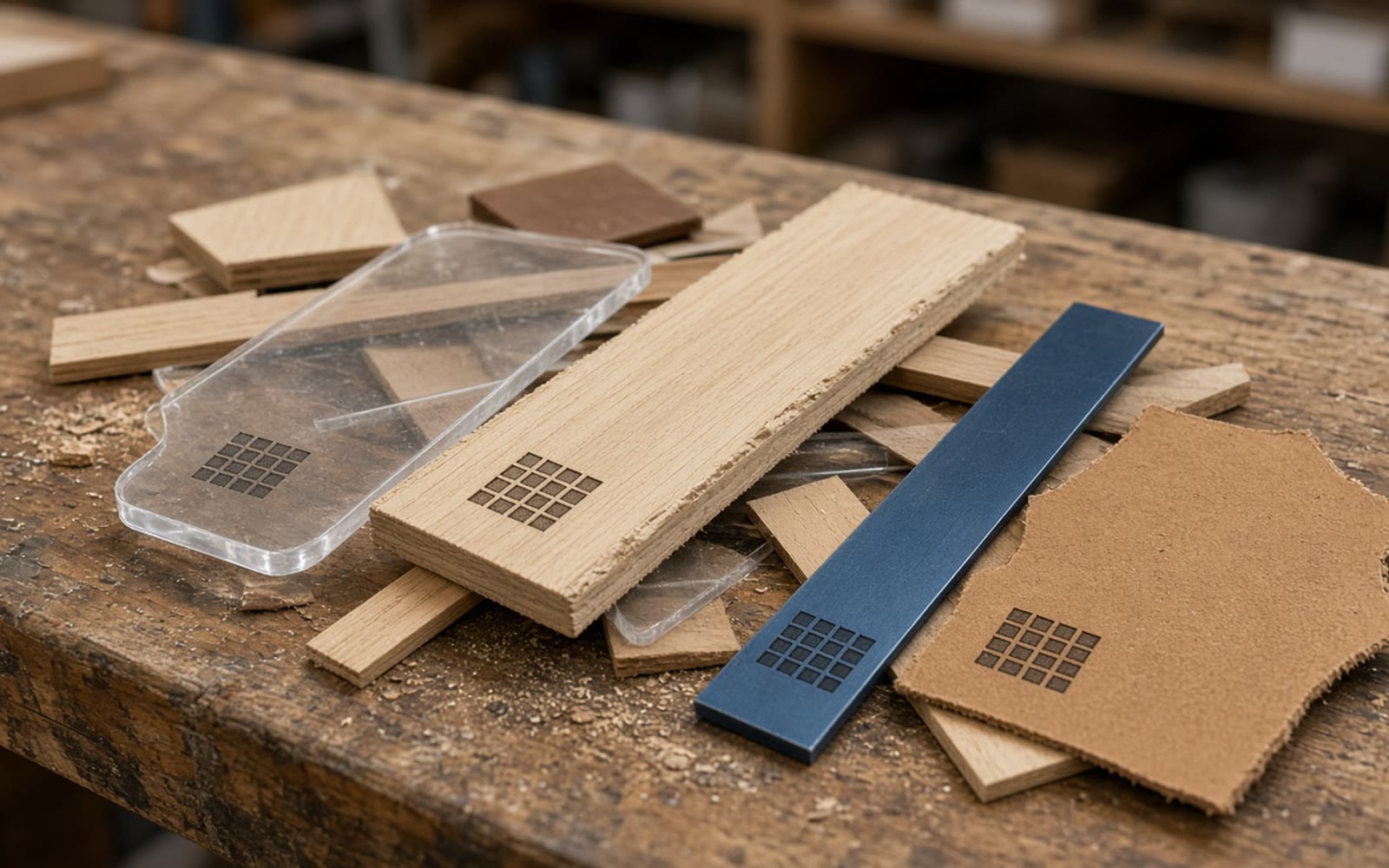
Organic materials like wood, plywood, MDF, bamboo, leather, paper, felt, and cork very well absorb the 10.6 µm light of the CO₂ laser. According to the source, a CO₂ laser can cut and process these materials, cut transparent and colored acrylic, frost glass, and mark ceramics and stone.
A blue diode laser also works with wood, leather, paper, cork, and dark or opaque acrylic. Transparent or light-colored acrylic transmits the 450 nm light and cannot be cut with a diode; in dark acrylic, it's the pigment absorbing the light. A diode laser cannot process glass. xTool also notes that the optical wattage given for diode lasers is not directly comparable to the wattage of a CO₂ tube.
Metal: fiber and MOPA
Bare metal is a common mistake for CO₂ and diode lasers. According to the guide, shiny aluminum reflects approximately 97% of 10.6 µm light back; CO₂ and diode can only leave a mark on metal with a coating like metal marking spray. A diode laser can remove the dyed oxide layer from anodized aluminum, providing a contrast mark.
At 1064 nm, the table turns: Stainless and carbon steel, aluminum, titanium, and brass can be marked and deeply engraved with a fiber laser. Copper, gold, and silver absorb this wavelength less, meaning they are processed more slowly and have a risk of reflection. Fiber lasers do not process wood, paper, fabric, and clear plastic; the typical work area is limited to 100–300 mm due to the F-theta lens, according to the source.
MOPA is a fiber laser with adjustable pulse duration. According to xTool, this adjustment allows for colorful marking with interference colors created by the oxide layer on stainless steel and titanium without paint, and black marking on anodized aluminum. Since color results vary by surface, alloy, and focus, retesting is required for each batch of material.
Glass, ceramics, and sensitive plastics: UV
A UV laser at 355 nm breaks molecular bonds directly rather than heating and burning the material, which is why it's known as “cold marking,” with a very small heat-affected area. According to the source, glass, crystal, ceramic, stone, and plastics like ABS, polycarbonate, PET, and silicone can be marked with UV. Its power is low and it does not cut thick materials.
A short checklist for the workshop
Before starting a job, check which wavelength the material absorbs, and if in doubt, perform a small test on a leftover piece. Trying to use a diode for transparent acrylic or a CO₂ without coating for bare metal leads to wasted time.
Regardless of laser type, PVC and vinyl should never be processed with a laser. xTool's guide clearly states in the CO₂ section that these materials release chlorine gas, which harms both the user and the machine. Do not bypass the device's cover, lock, and sensors.
Sources
- Types of Laser Engravers: CO₂, Diode, Fiber, MOPA, and UV ComparedSource date: 25 October 2026
Rate this article
Your rating is stored in your account; everyone else sees only the average and the number of ratings. Details on the Privacy page.